UNICDA holds conference on the impact of the United States Independence in the Hispanic Caribbean
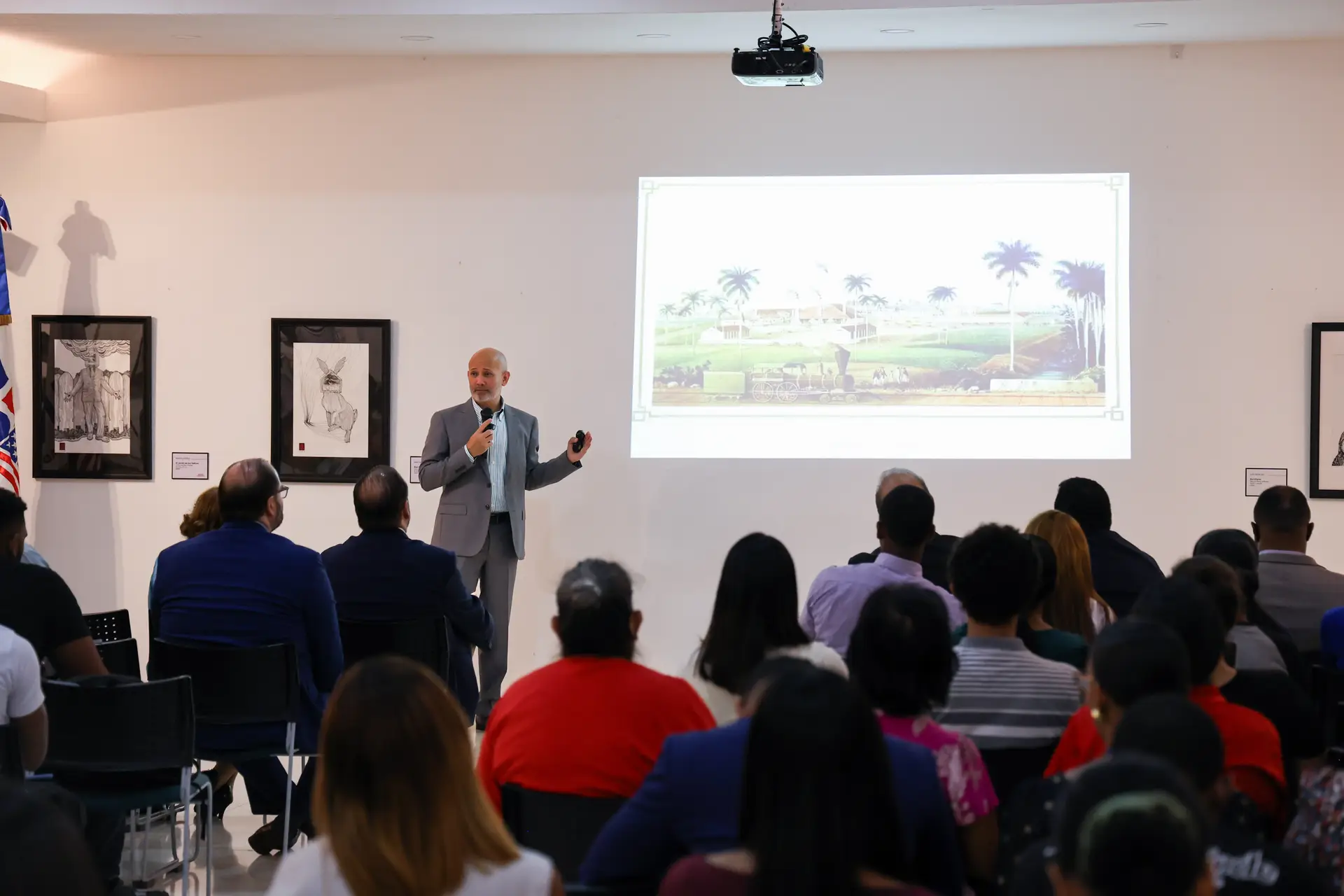
Santo Domingo, Dominican Republic. – The Domínico Americano University (UNICDA) celebrated the conference “Impact of the Independence of the United States on the Hispanic Caribbean,” an academic space for reflection and historical analysis that brought together academic authorities, teachers, students, and special guests to address one of the most influential events in modern history and its repercussions in our region.
The event began with welcoming remarks from Lic. Enrique A. Fernández Malla, rector of the Domínico Americano University (UNICDA). Subsequently, Amy Krusinger, Strategic Projects Coordinator of the United States Embassy in Santo Domingo, offered the introduction to this important academic gathering.
The conference was led by Dr. Javier Alemán Iglesias, a renowned historian and researcher, who shared a profound analysis of the political, economic, and social effects that the Independence of the United States had on the Hispanic Caribbean and on the configuration of hemispheric relations throughout history.
The activity was developed in collaboration with the United States Embassy in Santo Domingo and the Pontificia Universidad Católica Madre y Maestra (PUCMM), consolidating itself as a space for academic exchange and intellectual enrichment for all attendees.
This conference was part of the commemorative initiatives linked to the 250th anniversary of the United States, promoting learning spaces that allow for a better understanding of the historical events that have influenced the development of our region and strengthening critical thinking about our shared past.